
Wood Fence Performance in DFW: Heat, Clay Soil, and HOA Rules
How Cedar and Pine Actually Perform in DFW
We compare lifespan, strict HOA rules, and necessary installation depths.
Cedar and pressure-treated pine both function in DFW. They simply perform differently over time. If you plan a wood fence build in Dallas, material selection matters immensely. DFW features long summers, persistent UV exposure, and heavy clay soil. These extreme conditions destroy the wrong wood choice rapidly. This guide covers how different species perform above ground and why deep footings matter. We also explain exactly what your HOA likely requires before you break ground. Our direct employees handle your entire project without ever utilizing subcontractors.
Why North Texas Destroys Standard Wood Fences
Generic national performance data ignores the violent geological realities of DFW.
Generic fence performance guides mislead Dallas homeowners constantly. DFW runs through an extreme yearly cycle. Summer temperatures exceed 100 degrees for consecutive weeks. Fall brings heavy rain. Winter delivers rapid freeze-thaw events. Finally, high spring winds pull moisture violently from the soil and the wood simultaneously. This brutal wet-dry cycle heavily stresses fence boards and structural posts.
The ground makes survival even harder. DFW sits on expansive black clay soil. This earth swells heavily when wet and contracts violently when dry. This continuous movement applies immense lateral pressure against your fence posts. This geological cycle explains why a straight fence in November leans heavily by August.
Above ground, UV load destroys untreated wood. DFW's long summer delivers intense direct sun. UV radiation breaks down the lignin inside wood cell walls quickly. Unsealed fence boards usually develop surface cracks within eighteen months. Wood fences remain a fantastic choice, but they require strict structural engineering to survive here.
Navigating Species Selection, Soil, and HOA Rules
Wood fence survival demands matching the correct lumber species to its environment.
Cedar Versus Pine Above the Ground
Western red cedar heavily outperforms pine against sustained Texas heat and UV load.
Cedar naturally contains aromatic oils that resist rot and insect damage. More importantly, cedar holds its dimensional shape far better through DFW's wet-dry cycles. It warps significantly less than pine. Properly installed and sealed cedar boards routinely last fifteen to twenty years here.
Pressure-treated pine boards usually last ten to fifteen years before severe warping occurs. The chemical treatment preventing rot does not stop thermal expansion. As the chemicals migrate under the Texas sun, pine boards warp and crack heavily. We install premium tight-knot cedar to guarantee lasting structural privacy.
Pine Posts Below the Ground
Ground-contact pressure-treated pine serves as the absolute correct specification for underground posts.
This specification represents strict structural engineering, not a cheap shortcut. Pressure-treated lumber rated for ground contact resists the continuous moisture of DFW clay soil.
However, post depth matters far more than post material. Soil movement causes almost all fence failures in North Texas. Our direct employees strictly follow the one-third depth rule for every post footing. These massive concrete footings safely anchor your heavy fence against shifting soil.
HOA Finish Requirements Across DFW
Strict HOA rules dictate exactly what your community allows before you order materials.
Most homeowners know their HOA must approve new fence construction. Fewer realize HOAs frequently dictate specific stain colors and exact board profiles. Communities across Plano, Allen, McKinney, and Frisco demand precise architectural compliance. Some strictly prohibit unstained natural cedar from facing the street.
We manage these strict requirements directly. We prepare the exact documentation your Architectural Review Committee demands. This prevents costly tear-downs caused by ordering the wrong stain color.
We also evaluate your specific wind exposure. Board-on-board panels block sightlines completely but capture massive wind load. Shadowbox panels allow wind to flow through alternating gaps safely. We recommend specific panel styles based exactly on your lot's wind exposure.
Common Fence Scenarios Across Dallas Suburbs
We solve specific structural and legal fence challenges across North Texas daily.
Scenario One involves replacing failing pine panels. A Garland homeowner watched their seven-year-old pine fence warp and split completely. DFW's aggressive climate destroyed the wood much faster than expected. We quoted a replacement using premium cedar boards set on deep concrete footings.
Scenario Two involves complex HOA approvals in Allen. The local community strictly required a cedar board-on-board style featuring a specific semi-transparent brown stain. Our in-house team prepared the required material specs and layout drawings directly. The homeowner submitted our package and received immediate approval.
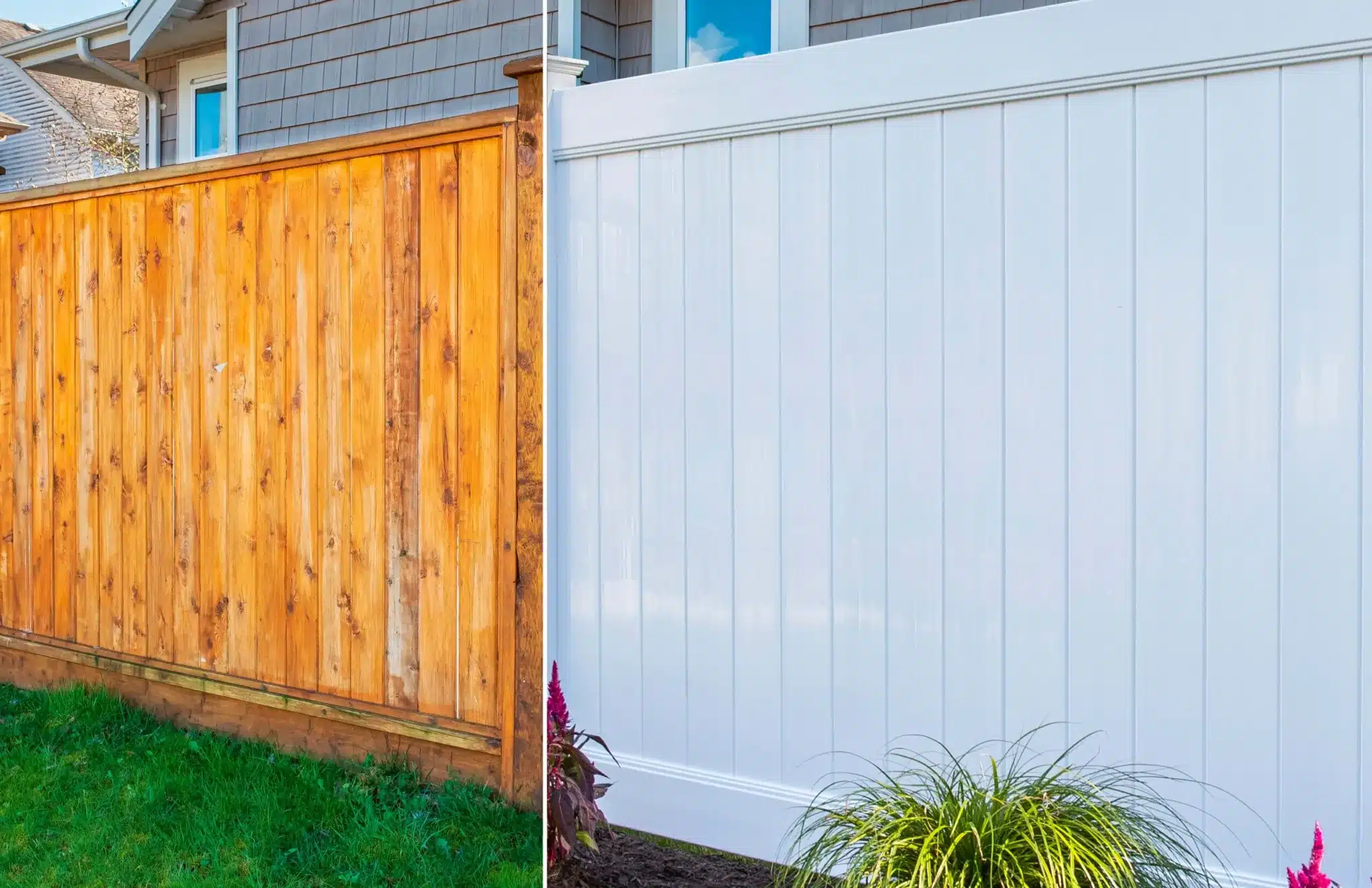
Scenario Three involves a Frisco homeowner debating cedar versus vinyl. Vinyl requires zero staining, while cedar provides a premium natural aesthetic. The right choice depends on the homeowner's willingness to re-stain the cedar periodically.
Field Engineering by Founder Elia Amiel
True structural integrity requires deep concrete footings and properly sourced, dry lumber.
I am Elia Amiel, Founder of Star Gate & Fence. I evaluate failing fences across Dallas constantly. Early failures almost always stem from two specific installation errors. The boards were installed containing excessive moisture, or the posts were set too shallow.
Wet lumber warps aggressively as it dries under the Texas sun. A board looking perfect in March cups violently by July. This represents an installation timing problem, not a wood species failure.
Post depth represents the second major failure point. Shallow 24-inch footings fail rapidly in expansive clay. We set posts significantly deeper, enforcing the one-third depth rule on every single project. It requires massive concrete volume, but it prevents the fence from leaning permanently.
Why You Need a Local Fence Professional
A physical site assessment provides exact structural data for your specific property.
Online research helps you choose between cedar and pine. However, calculating required post depth, slope adjustments, and HOA compliance requires a physical property inspection.
A licensed contractor understands exactly how to read a sloped Dallas lot. We know which specific communities demand ARC documentation before scheduling. We deploy our direct employees to build your project. We absolutely never use subcontractors. Star Gate & Fence has secured DFW properties since 2015.
Fencing Service Across the DFW Metroplex
Our in-house construction crews build custom wood fences across all major North Texas suburbs.
Star Gate & Fence operates without geographic restrictions throughout the DFW Metroplex. We serve Dallas, Fort Worth, Plano, Frisco, and McKinney. Our trucks run daily to Allen, Garland, Irving, Arlington, and Denton. We also build across Rockwall, Southlake, Colleyville, and Prosper.
Start Your Custom Fence Project Today
Contact our local team to schedule a precise property assessment and secure a quote.
You now possess the facts required to select the correct wood fence material. Call 469-778-0871 or email info@stargateandfence.com to start your project. Tell us your city, your fence material choice, and your specific HOA situation. We will deliver a straight answer regarding exactly what your property needs.