Metal vs. Wood Posts for a Horizontal Privacy Fence

Understand how wood and steel posts differ in resisting moisture and supporting horizontal privacy panels, while sharing the same concrete footing depth rule.

Wood posts can rot at the ground line where clay traps water. Steel posts hold tall, solid horizontal privacy fence panels straight against wind load. The one-third depth rule for concrete footings applies to either material.

Steel posts can support horizontal wood boards.
Comparing posts for a horizontal privacy fence

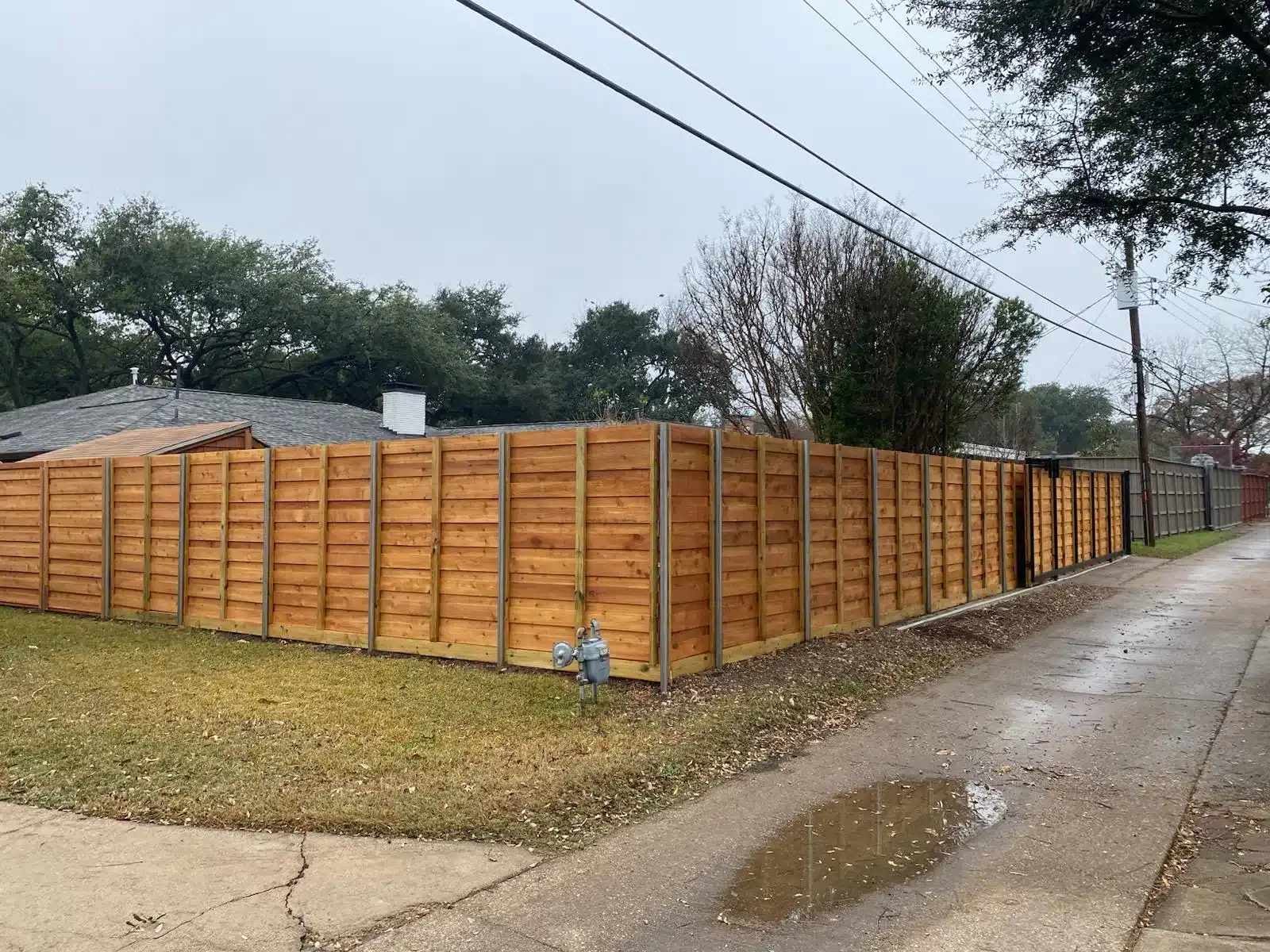
Horizontal wood privacy fence with visible metal posts wrapping a corner beside a paved residential lane.

Both post types depend on concrete footing depth and the clay supporting the base.

Steel posts hold tall, solid horizontal panels straight against wind loads. Both need concrete footings that follow the one-third depth rule.

**Steel is the better post material for a tall horizontal privacy fence.** Steel holds a solid panel straight against wind across long horizontal board runs. It also does not rot at the clay line. Wood posts can support the same fence style, but they can rot below the grass while appearing sound above ground.

How steel posts support solid horizontal panels

For horizontal designs, compare the post material listed in each proposal. Steel posts support tall, solid panels against wind load. See our horizontal fence installation and sliding gate project for a related example.

Metal posts can extend above a wood fence, and exposed construction makes the wood and metal components’ fit clear.

Why wood posts rot at the ground line

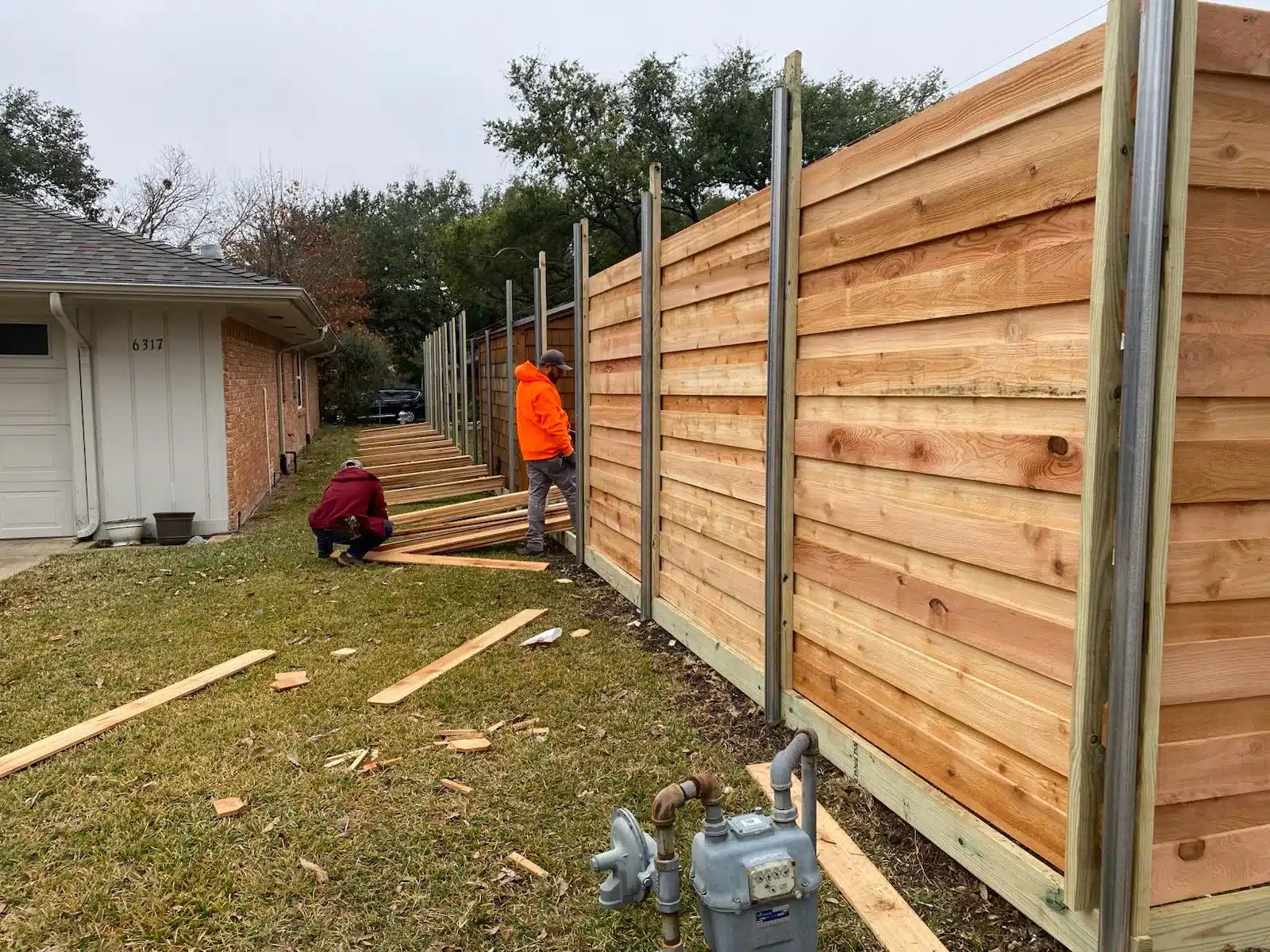
Two workers beside a horizontal wood fence with metal posts, loose boards, and offcuts near a brick house.

When comparing proposals, check whether the posts are wood or steel and whether the footing depth follows the one-third rule.

Expansive black clay soil is the reason many DFW builds fail. Clay expands as it gains moisture and shrinks as it dries.

Clay heave can push our fence posts upward, contributing to clay-related fence leaning.

Talk to our team

Contact our team at Star Gate And Fence. Request an on-site review of post material, footing depth, clay conditions, and gate requirements.

Why the one-third depth rule still applies with metal posts

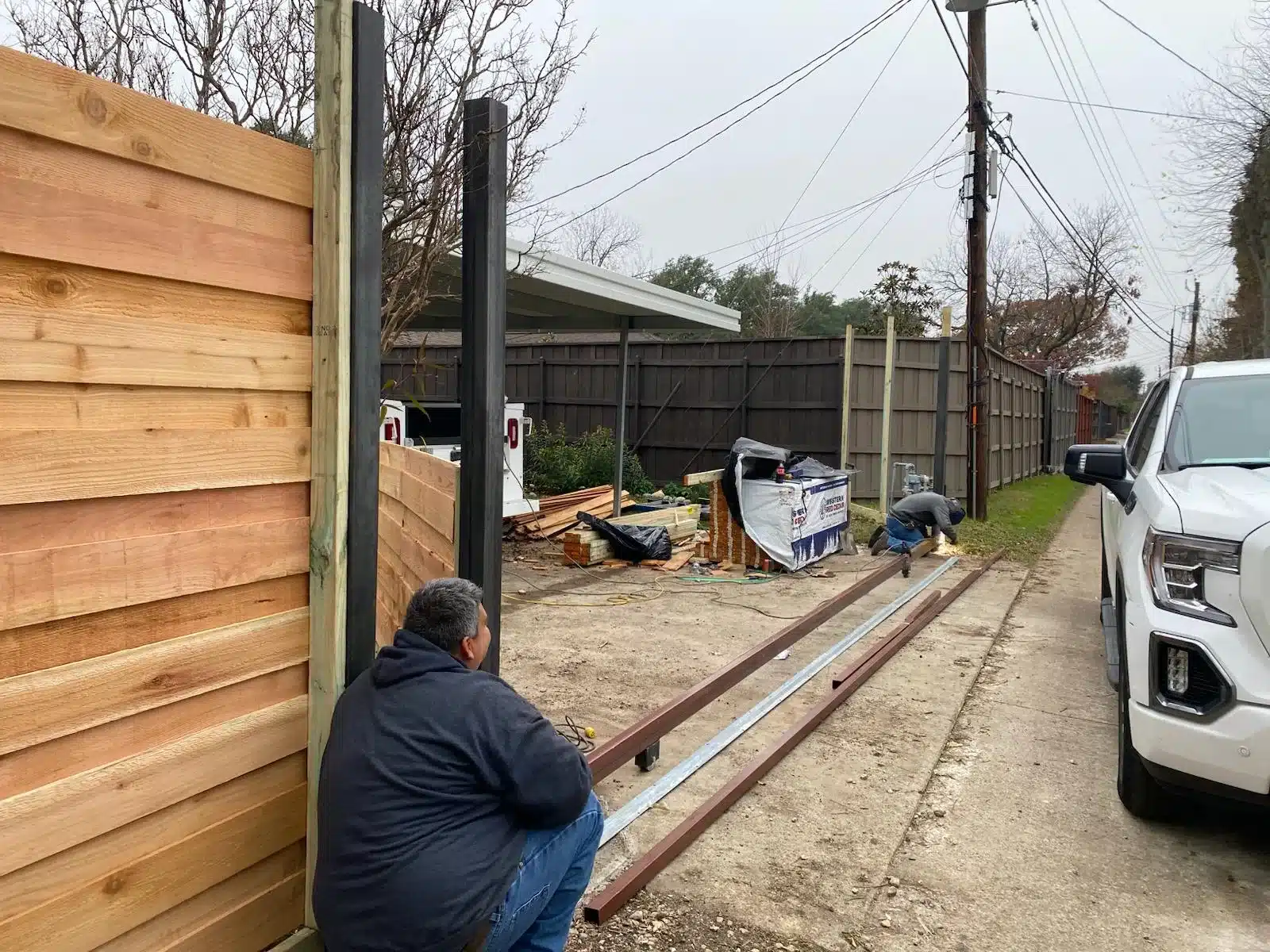
Horizontal wood gate area with black steel posts, metal framing on the driveway, and workers nearby.

For a six-foot privacy fence, we use a minimum three-foot concrete footing to resist clay movement.

The one-third depth rule means a three-foot concrete footing for a six-foot fence, including steel-post fences in expansive clay.

How a gate changes the post and frame review

Automated vehicular gates also need ASTM F2200 and UL 325 compliance where those standards apply.

Check local permit and licensed-trade requirements before work begins.

What to confirm before choosing a post system

Ask for these details when comparing proposed wood-post and metal-post designs:

  • Post material and dimensions, including how the horizontal boards connect to the supports.
  • The concrete footing specification, with the one-third depth rule translated into the proposed depth.
  • The full fence and gate configuration, including corners, openings, and moving components.

We provide wood fence installation, HOA fence installation, and commercial fence installation.

Frequently asked questions

Can a wood fence post look sound even if it is rotting?

Yes. A wood post can look normal above the grass while rotting underground at the ground line. Clay can trap water around the post, while repeated expansion and shrinking can move the footing.

What should I compare when reviewing wood-post and steel-post fence proposals?

The review should also cover corners, openings, gates, and other moving components.

Does an automated gate change the post and frame requirements?

Yes. A gate adds an opening and moving parts. Automated vehicular gates also need ASTM F2200 and UL 325 compliance where those standards apply.

Gates, fences and outdoor construction across DFW

Tell us your city and what you need built or repaired, and our direct employees will assess the site and quote the work in writing.