How to Prevent Horizontal Wood Fence Sagging and Warping
Learn how board alignment, post depth, concrete footings, and DFW clay affect horizontal fence sagging, plus when movement needs professional evaluation.
Dallas-Fort WorthElia Amiel
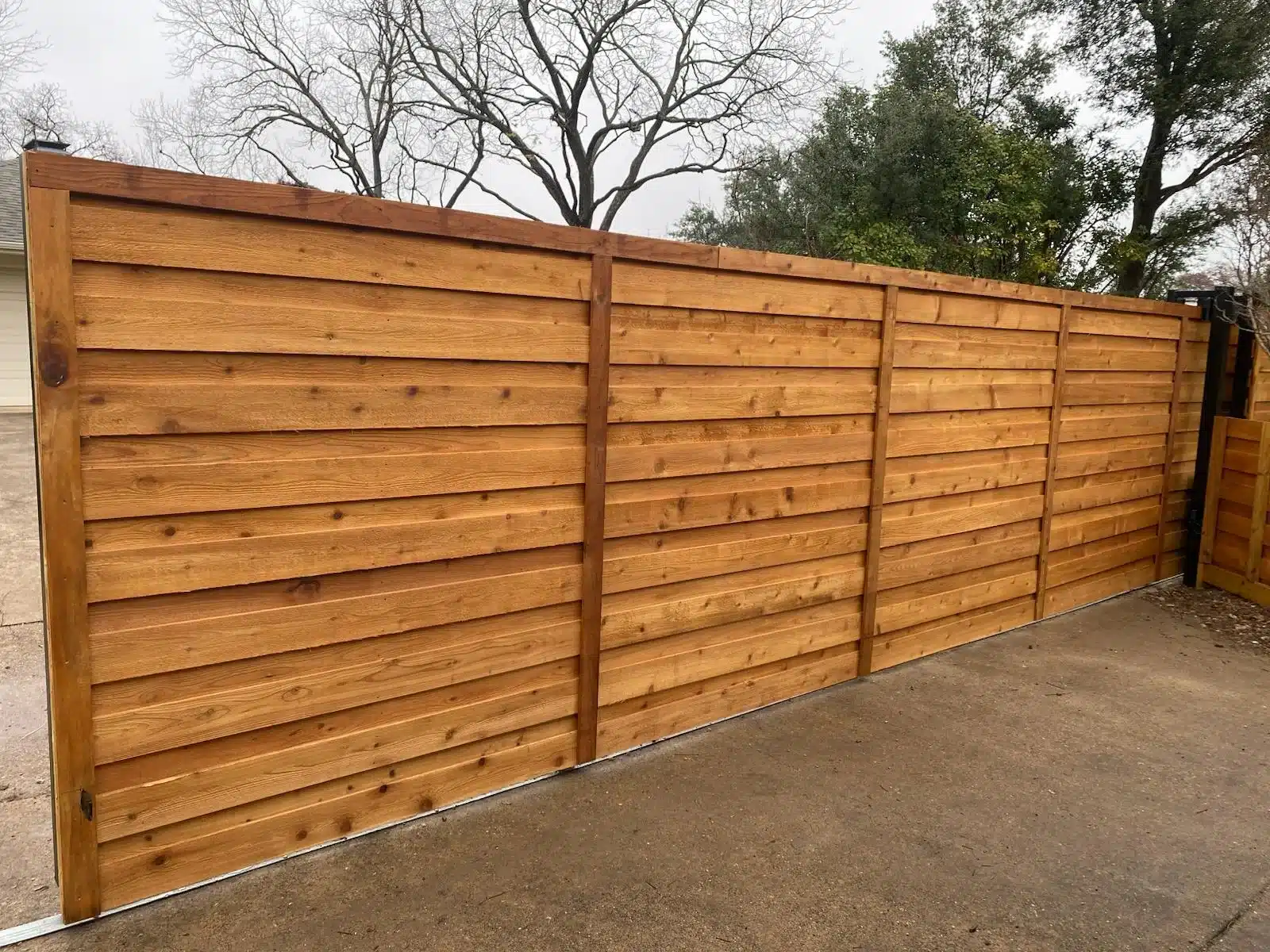
Preventing horizontal wood fence sagging starts with stable posts, concrete footings, and board alignment checks during installation. Warping also involves the wood itself, which changes shape as it gains or loses moisture.
In DFW, expansive black clay makes the support below ground especially important. Our wood fence installation and repair work addresses both the horizontal panels and the posts carrying them.
Causes of horizontal wood fence sagging
Sagging can begin within a panel or at its supporting posts.
Horizontal boards span between vertical supports, so their alignment depends on both the boards and the supporting structure. A bowed board can interrupt one line while neighboring boards remain straight. A leaning post can move the edges of several boards together.
The inspection must separate those patterns. Movement within a panel points toward its boards, attachments, or framing. Movement across several board lines calls for checking the supporting posts and footings.
To understand sagging, the useful observations are board shape, panel alignment, and post position.
Post depth, concrete footings, and DFW clay
Stable posts depend on the support below ground.
We use the one-third depth rule for concrete footings. One-third of the post’s total length belongs below ground, set in concrete. This buried portion supports the post against forces acting on the fence above it.
Expansive black clay soil causes fence failures across DFW. It swells as it takes on moisture and shrinks as it dries. That movement can push shallow supports out of position, changing the board lines above them.
An experienced fence professional should evaluate footing design and structural post movement. The depth rule is one part of that evaluation; soil conditions and the structure being supported also matter.
Board alignment checks during installation
Alignment checks matter while each panel is taking shape.
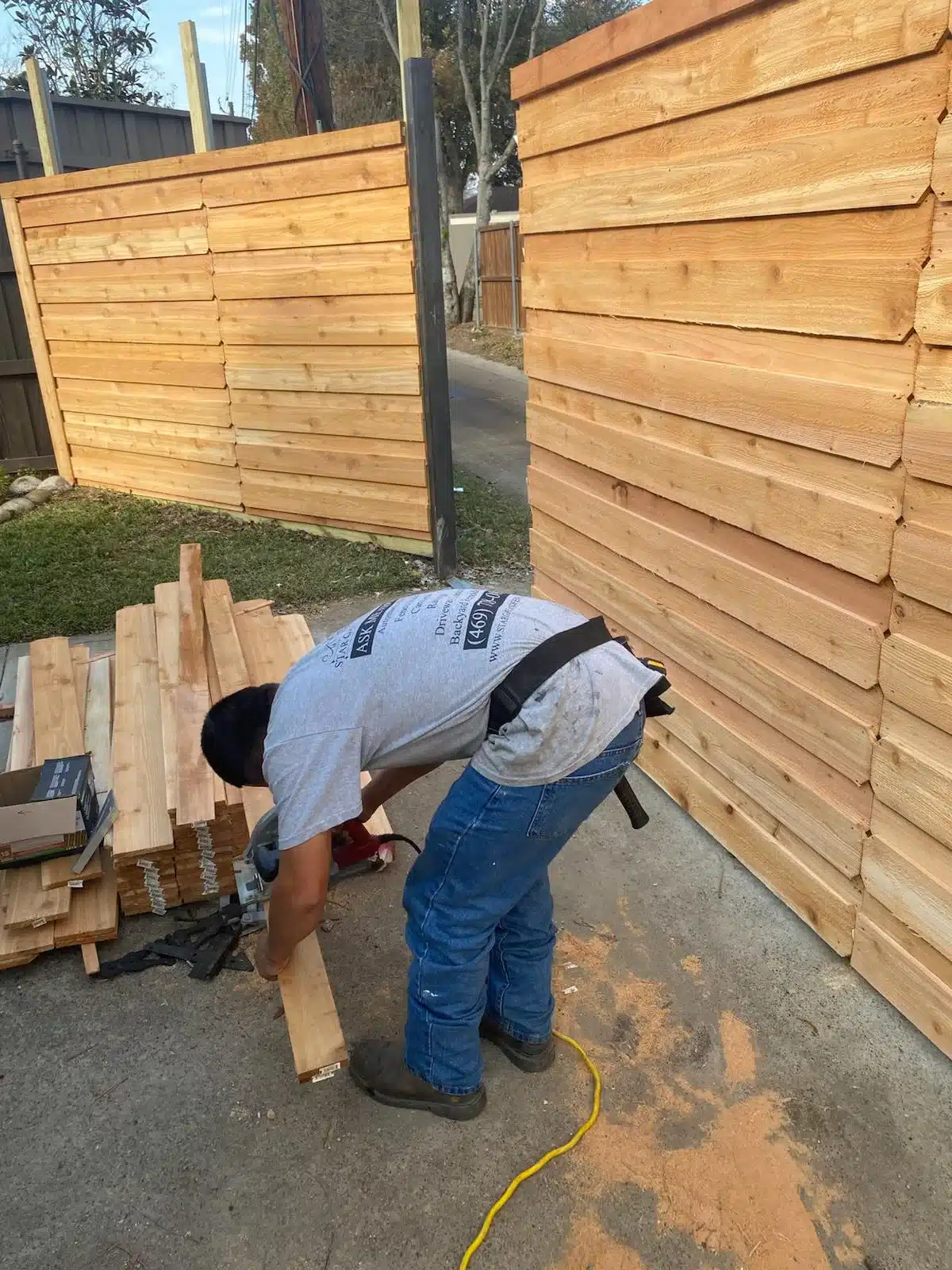
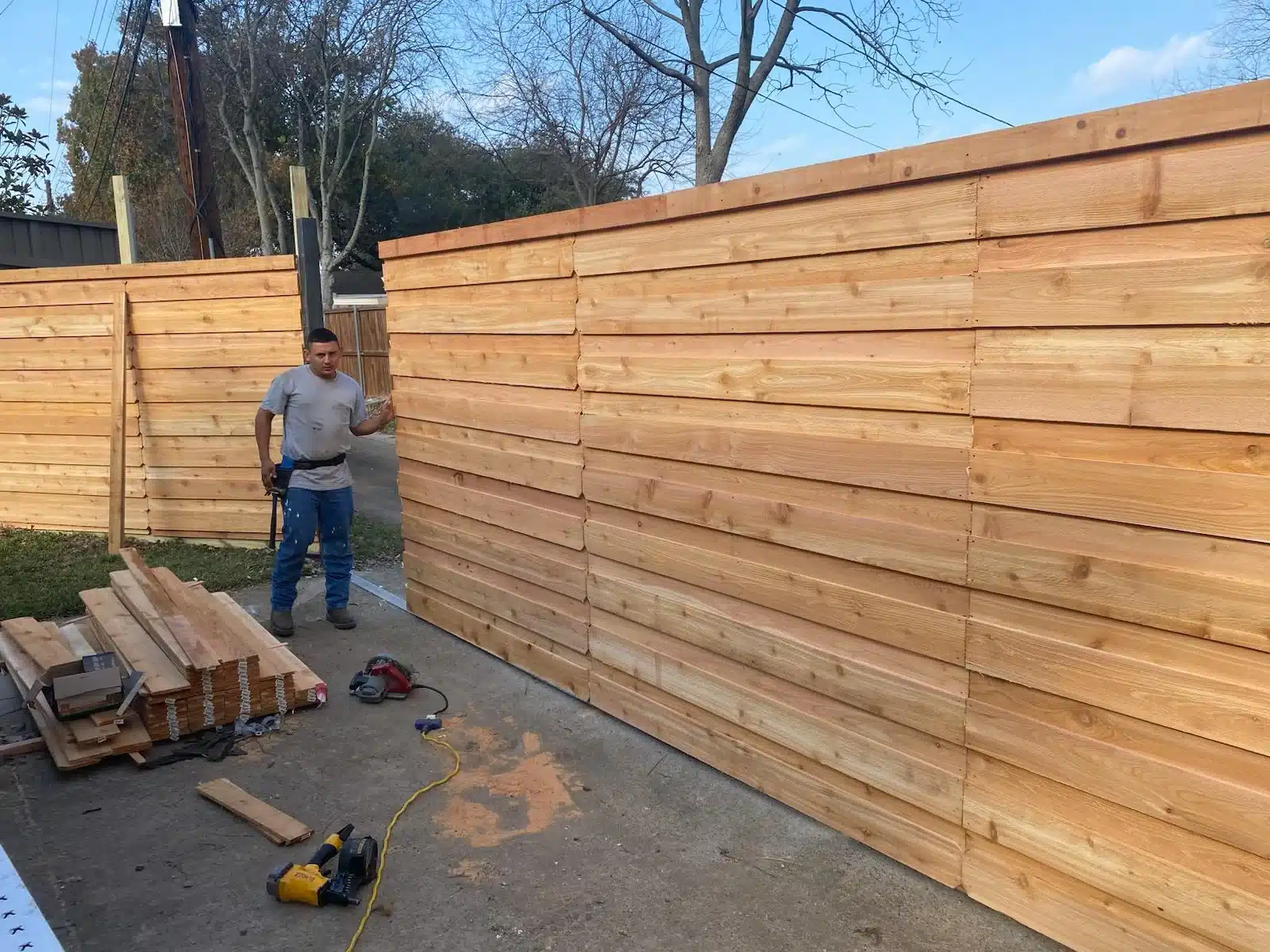
During wood fence installation, the developing board lines need checking against the vertical supports. A small change can become more noticeable as more horizontal courses are added.
Tightly arranged boards make changes in alignment especially visible. The top edge, board joints, and transitions between panels provide useful reference points during assembly.
Installation checks include these separate details:
Board shape: bowing or twisting within individual pieces.
Panel alignment: horizontal courses and their relationship to adjoining panels.
Support position: vertical posts and the framing carrying the boards.
Talk to our team
DFW homeowners, HOA boards, and property managers can contact us about movement in horizontal boards, panels, posts, or footings. Our direct employees can evaluate the affected structure.
Factors affecting fence cost and installation time
The scope includes materials, ground conditions, approvals, and crew scheduling.
Fence size determines how much board material, framing, and footing work the project involves. Wood and framing choices also affect material needs and assembly work.
Soil and other site conditions affect the work below the panels. An existing concrete surface, for example, changes access to the ground where support may be needed.
Permit or HOA requirements can affect the design and scheduling. Confirm local permit requirements with the relevant authority before work starts, and use a professional for structural work. The installation schedule must account for approvals, materials, site work, and crew availability.
Professional evaluation for a sagging fence
The repair scope follows the location and cause of movement.
Our fence repair and storm restoration work includes evaluating the affected fence structure. A distorted board, a displaced panel, and a moving footing call for different assessments.
Straightening a board line while its support continues moving leaves the underlying cause in place.
All our work is completed by direct employees, never subcontractors. Repair or replacement decisions depend on the condition of the boards, framing, posts, and footings at the property.
Frequently asked questions
Can an existing horizontal fence panel be straightened after it sags?
Some sagging conditions involve individual boards; others involve the structure carrying the whole panel. The assessment must identify which components have changed shape or position. Our fence repair and storm restoration service addresses existing fences, but the repair scope depends on their condition. A site evaluation establishes which parts need attention before straightening work is planned.
Does cedar still warp in DFW weather?
Yes. Cedar is wood, and changes in moisture can change its shape. Choosing cedar does not remove the need to inspect board condition and alignment during installation. Soil movement is another concern: expansive black clay can shift the supports beneath cedar panels.
Should horizontal fence boards have gaps between them?
Gap details depend on the intended fence design and how its boards are arranged. A tightly arranged face still needs a design that accounts for wood movement. During installation planning, board layout and support details should be considered together before the panels are assembled.
How can I tell whether the boards or the posts are moving?
Observe the fence from the same position over time, using the panel edges and post lines as references. Changes limited to one board suggest a different issue from several courses moving together. Keep observations visual. Share where the change first appeared so a professional can assess the affected supports and panels.
Gates, fences and outdoor construction across DFW
Star Gate & Fence, (469) 778-0871. Tell us your city and what you need built or repaired, and our direct employees will assess the site and quote the work in writing.