
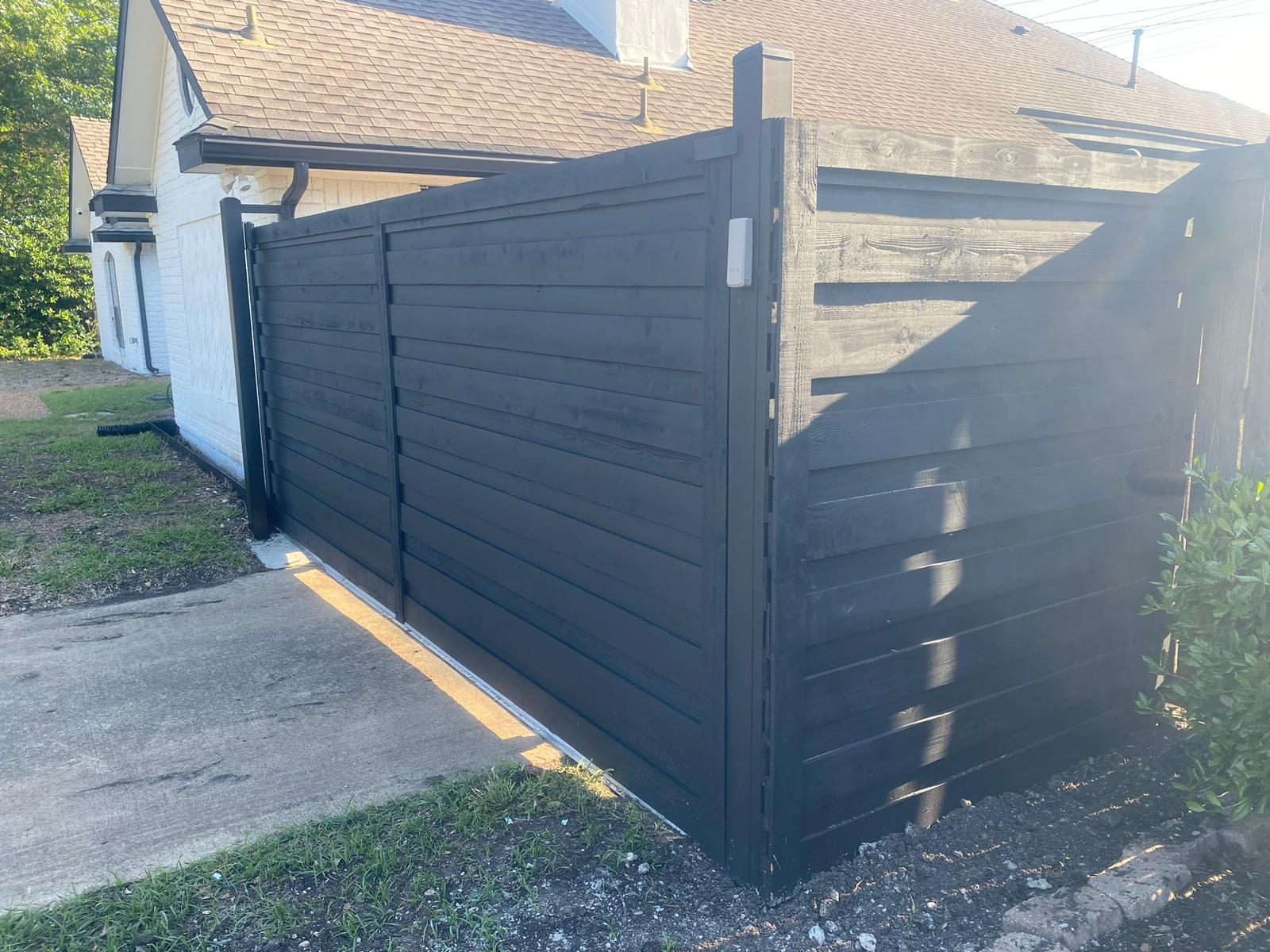
Why Is My Fence Leaning? The DFW Clay Soil Problem
The Soil Answer Most Homeowners Never Get
A leaning DFW fence usually indicates a severe soil problem, not bad lumber.
DFW sits directly on highly expansive black clay soil. This earth swells dramatically when it absorbs heavy spring rainwater. It then shrinks violently during extreme August heat. That aggressive geological cycle repeats every single year. It pushes heavy fence posts upward and sideways. This soil movement destroys fences installed with shallow concrete footings. Understanding exactly how this soil behaves determines which repair actually holds permanently.
Black Clay Behaves Identically Across the Metroplex
The exact same expansive soil runs under Dallas, Richardson, Garland, Plano, and Mesquite.
Most homeowners misunderstand the raw power of DFW black clay. It represents one of the largest deposits of high-plasticity expansive clay in North America. This soil exerts massive vertical and lateral force on anything buried inside it. When the soil expands, it pushes the post upward violently. We call this specific process post heaving.
When the soil eventually dries, it contracts and pulls away from the concrete. This creates a deep soil shrinkage gap. The post shifts laterally into that empty void before the next rain cycle. Over three years, that gap widens significantly. The heavy wood post moves a little more during each cycle. Soon, your neighbor's fence starts leaning too. Star Gate & Fence pulls leaning posts across the DFW Metroplex daily. Our direct employees see this exact failure pattern constantly.
Diagnosing Leaning Posts in Richardson
Real diagnostics determine if your leaning post requires a reset or total replacement.
I am Elia Amiel, Founder of Star Gate & Fence. A homeowner in Richardson recently called us regarding a leaning cedar privacy fence. Three posts had started tilting heavily toward the yard. No storm debris hit them. The above-ground cedar looked completely fine.
Our direct employees pulled the first post to inspect the footer. The concrete stopped at roughly 24 inches deep. In stable soil, that depth works. In DFW black clay, it completely fails. The concrete footer sat right in the most violent expansion zone. The soil heaved the intact concrete upward over the years.
The second post told a different story. The soil had kept the wood perpetually wet at the ground line. That post had rotted completely and required full replacement. The third post was leaning purely because the second post pulled the heavy panel sideways.
We reset the sound posts using the strict one-third depth rule for our footings. We replaced the rotted post entirely. We never hire subcontractors for these structural repairs. We diagnose the exact failure mechanism before we pour new concrete.
A Permanent Repair Requires Accurate Diagnostics
The correct repair depends exactly on what caused the initial soil failure.
Homeowners always ask if the repair will actually last. The answer depends on which specific failure scenario your fence faces.
Scenario one involves post heaving on a healthy wood post. The fix requires pulling the post, breaking the shallow concrete, and resetting it deeper. We utilize the one-third depth rule, pouring a massive three-foot concrete footer.
Scenario two involves post heaving combined with severe ground-line rot. The fix requires total post and footer replacement. We install a new pressure-treated post set in deep concrete.
A third situation occurs when a leaning panel pulls an adjacent, structurally sound post. We isolate and fix the source post to restore the entire fence line. DFW clay soil always cycles. However, a post reset using massive concrete volume survives those cycles safely.
How We Execute Post Repairs
Every post repair starts with a physical site diagnosis by our direct employees.
Our in-house team enforces absolute engineering standards on every repair project.
We strictly follow the one-third depth rule for every single concrete footer.
We size the concrete volume to support the specific panel span weight.
We utilize ground-contact pressure-treated lumber for all underground posts.
We physically inspect every single post for ground-line rot before resetting it.
We evaluate the adjacent panels because a repaired post cannot support broken rails.
We execute the mandatory 811 utility locate call before pulling any posts.
Variables That Dictate Long-Term Repair Success
Four specific variables determine whether a post repair survives the next DFW spring.
Footer Depth and Clay Soil
We dig deeper than standard municipal codes require to combat expansive clay.
The strict one-third depth rule dictates a three-foot minimum burial depth in North Texas. Standard municipal codes in Dallas and Plano often approve shallower depths meant for stable dirt. DFW clay is never stable. A shallow reset serves only as a temporary fix. Our direct employees dig deeper for absolute permanence.
Post Condition at the Ground Line
A deep concrete reset only works if the wood post remains structurally sound.
Wood that softens or rots at the burial point fails again quickly. Our accurate site diagnosis determines if a reset safely holds or if total replacement is mandatory.
Moisture Management Along the Fence
Managing surface water drastically extends the lifespan of any structural fence repair.
Sprinkler heads hitting the fence and pooling water accelerate the destructive soil cycle. Redirecting this surface water away from the post footers slows future soil movement.
Structural Concrete Volume
A deep footer lacking proper diameter width provides zero lateral wind resistance.
DFW clay soil moves sideways violently during extreme dry cycles. The concrete column must be wide enough to support the specific wood panel weight.
Gate and Fence Repair Service Across DFW
Our direct employees fix leaning fences across all major North Texas suburbs.
Star Gate & Fence performs expert post resets and structural replacements across the DFW Metroplex. We serve Dallas, Richardson, Plano, Garland, and Mesquite. We dispatch daily to McKinney, Frisco, Irving, Arlington, and Grand Prairie. If your fence leans in North Texas, our team can fix it permanently.
Ready to Fix Your Leaning Fence?
Stop guessing and let our local team diagnose your exact soil problem today.
Call Star Gate & Fence at 469-778-0871 or email info@stargateandfence.com to schedule your site visit. Tell us your city, fence material, and exactly how many posts are leaning. We will dispatch our direct employees to diagnose the root cause immediately.