Compare metal and wood fence posts in DFW clay. Learn what fence photos reveal and what needs confirmation about footings, structural support, and gates.
Wood posts can rot at the ground line where clay traps water, while steel posts hold tall, solid horizontal privacy fence panels straight against wind load. The one-third depth rule for concrete footings applies to either material.
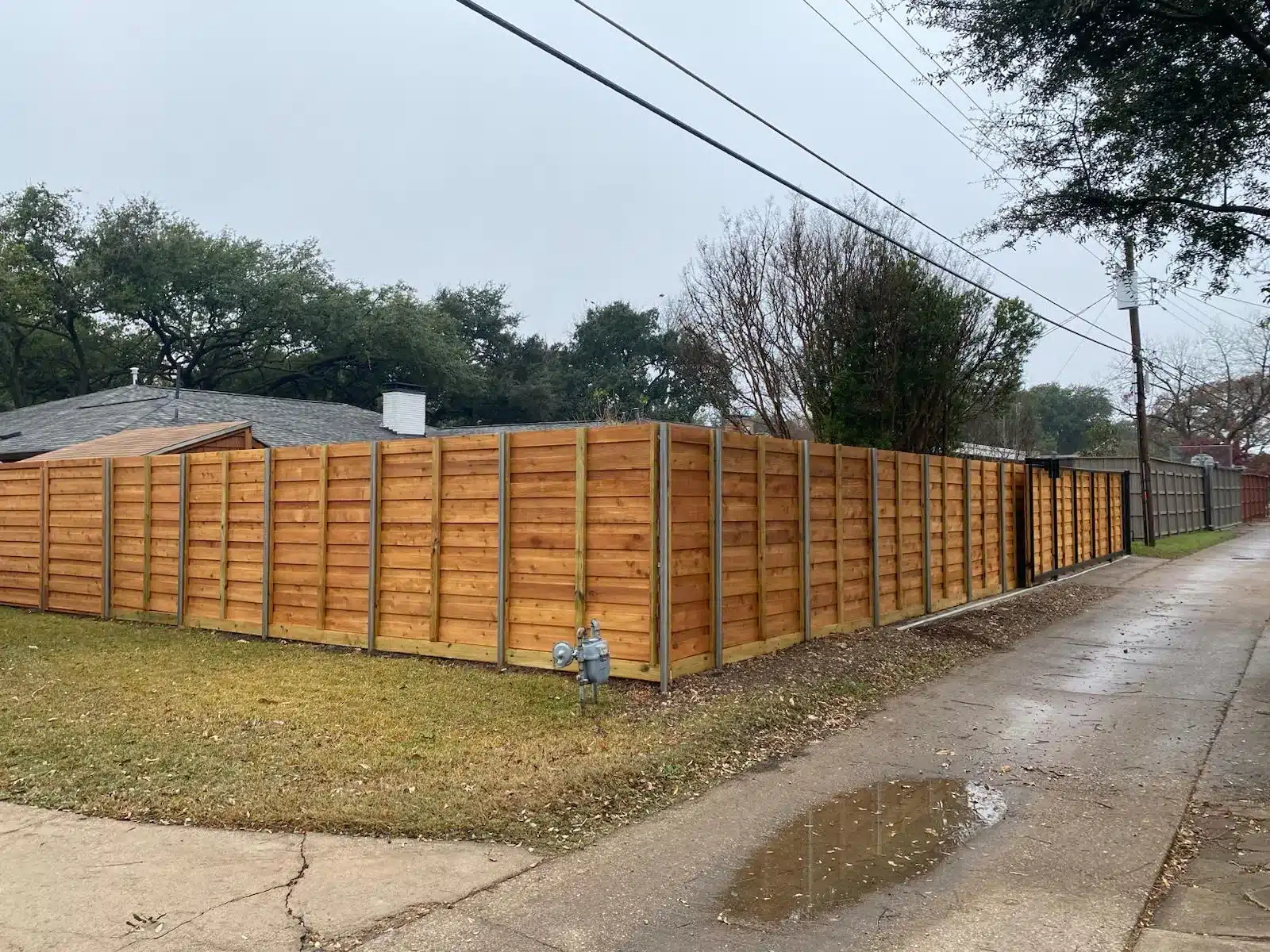
The photos here show horizontal wood boards supported by steel posts.
Changing wood to steel does not remove those dependencies.
The comparison needs the post dimensions, connection details, concrete footing specification, and fence configuration.
Vertical metal supports are visible along the fence. The view helps identify the board direction, support arrangement, and corner configuration.
The installation photo shows two workers beside a brick house, with boards and offcuts on the ground. Metal posts extend above portions of the wood fence, and the exposed side shows how wood and metal components sit together.
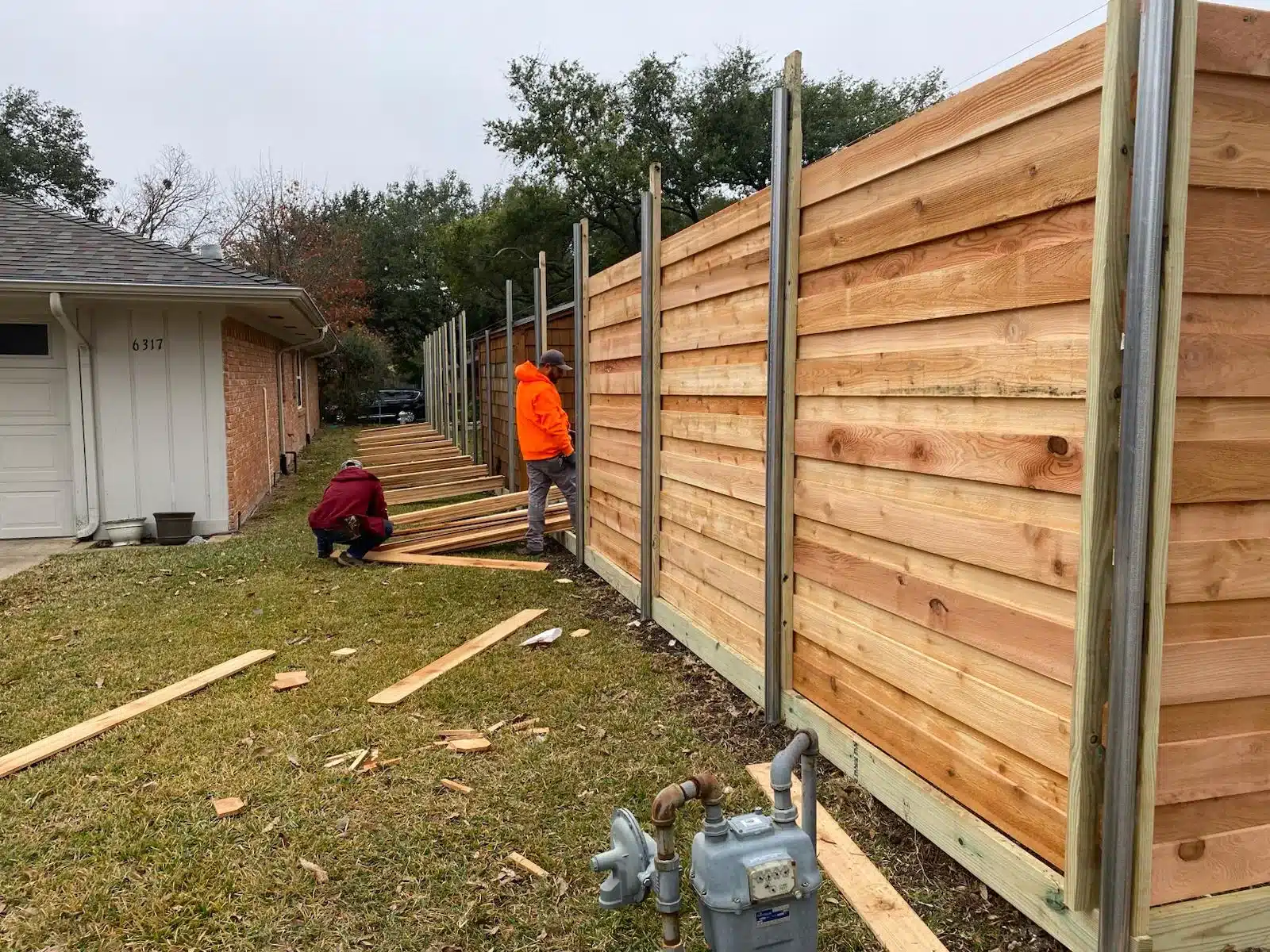
A wood post can rot underground while looking fine above the grass.
Expansive black clay soil is the reason many DFW builds fail. Clay expands as it gains moisture and shrinks as it dries. That movement can shift a footing and change post alignment; a metal post remains dependent on the soil supporting its concrete base.
Our explanation of clay-related fence leaning addresses this soil issue in more detail.
Contact our team at Star Gate And Fence to request an on-site review of post material, footing depth, clay conditions, and gate requirements. We work with DFW homeowners, HOA boards, and commercial property managers, with direct employees performing all work.
We follow the one-third depth rule for concrete footings.
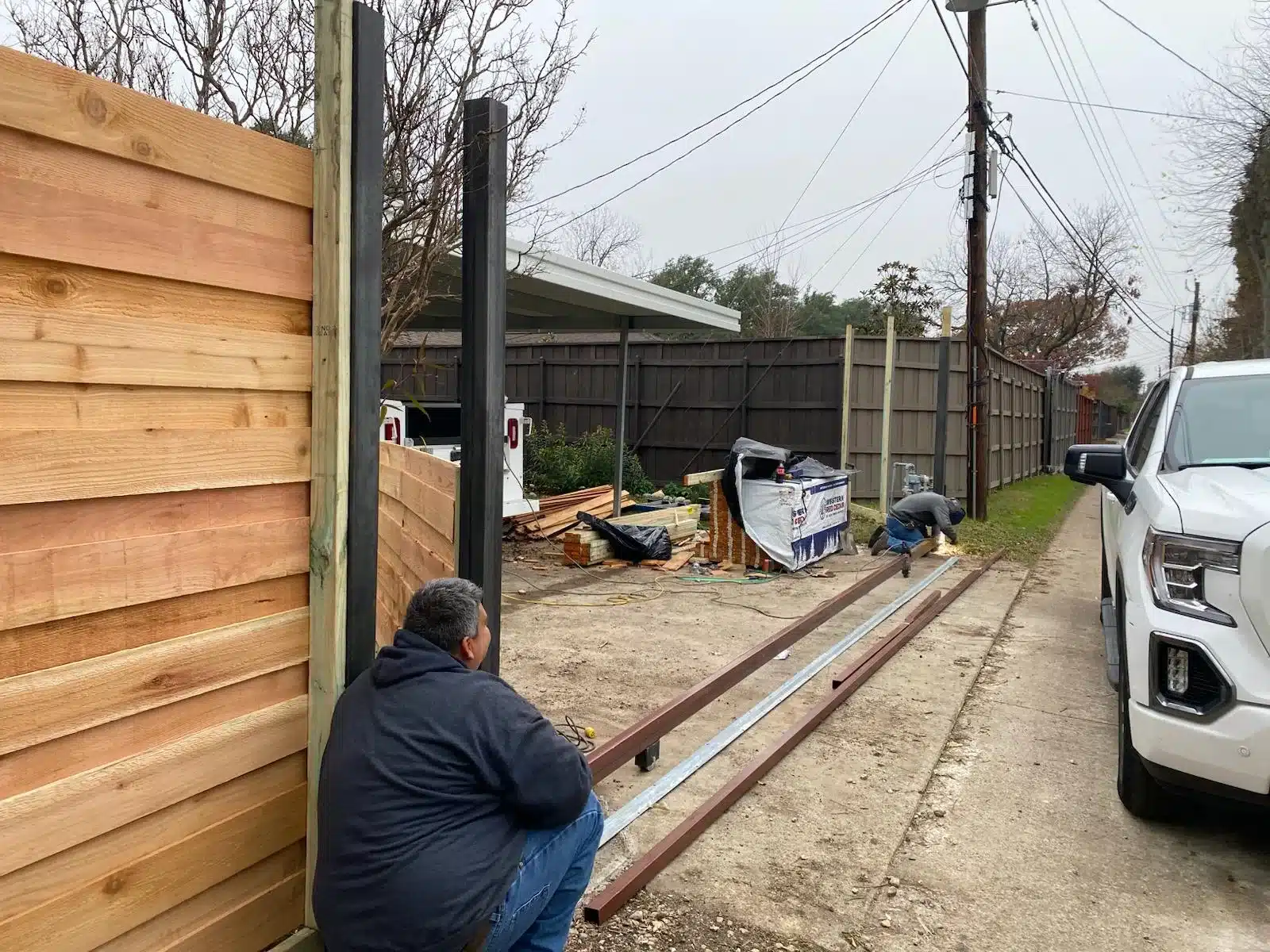
The installation photo shows work above ground, but it does not expose the full footings.
Those visible components identify a different assembly from the fixed fence run.
For an automated vehicular gate, ASTM F2200 and UL 325 compliance must be addressed where those standards apply. Check local permit and licensed-trade requirements before work begins.
Ask for these details when comparing proposed wood-post and metal-post designs:
We provide wood fence installation, HOA fence installation, and commercial fence installation. All our work is done by direct employees, never subcontractors.
Tell us your city and what you need built or repaired, and our direct employees will assess the site and quote the work in writing.