
Gate and Fence Contractor in Dallas

Our direct employees handle Dallas gate, fence and outdoor structure work, from new installations to repairs informed by soil and drainage conditions.

Dallas gate and fence work starts with the ground beneath the opening or fence line. Expansive black clay causes failures as changing moisture shifts supports. We check drainage and alignment when installing automatic and custom iron gates or repairing gates and electric operators. We also install wood, vinyl, wrought iron and chain link fencing.

Our concrete work includes driveways and gate pads, alongside carport installation. Direct employees carry out every job; we never use subcontractors. Founder Elia Amiel works in the field. We account for summer heat when planning concrete curing and checking exposed operator components.

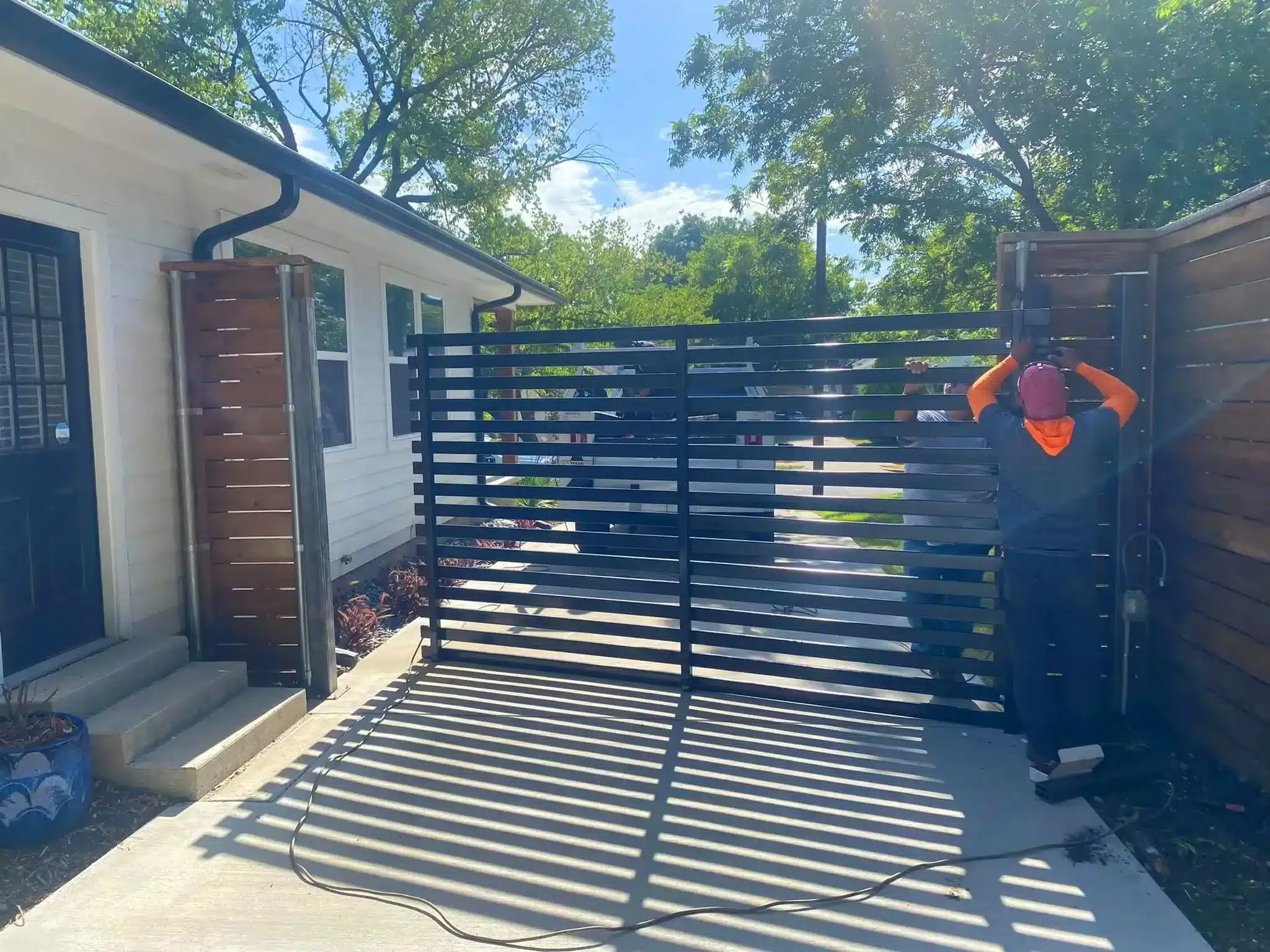
Black horizontal slat metal gate open on concrete driveway between pillars.

Ground movement shapes the installation.

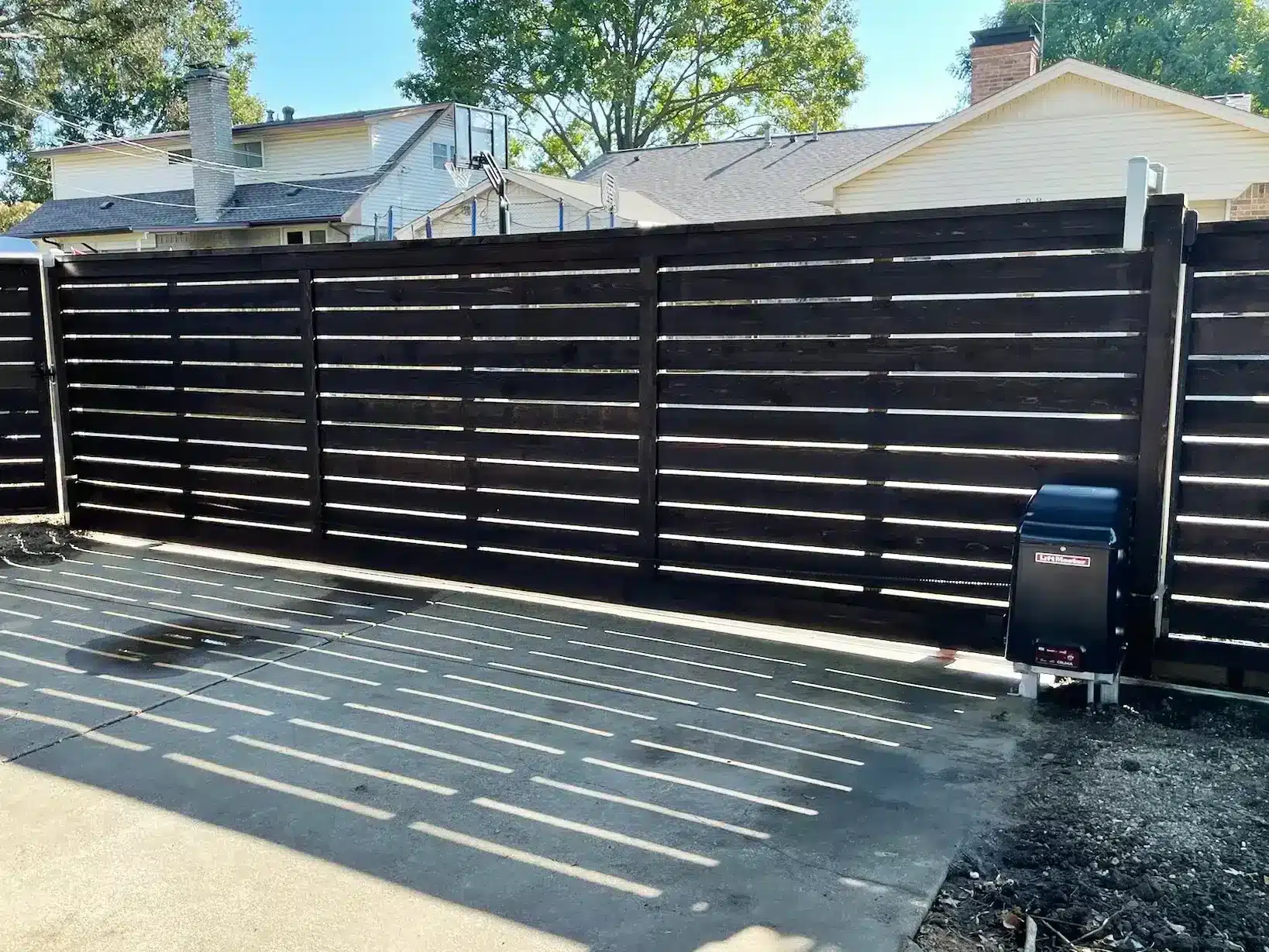
Black horizontal slat driveway gate with automated opener at residential property.

Expansive black clay is a cause of DFW gate, fence and concrete failures. The USDA soil description documents a Dallas County soil series with high shrink-swell potential and very slow upper-layer permeability. That makes soil and drainage checks part of our site assessment rather than an assumption about every property.

Clay expands as it takes on water and contracts as it dries. Movement around a shallow post can change its position, pulling a fence out of line or shifting a gate away from its latch. We use the one-third depth rule for concrete footings and assess where surface water collects around posts, gate pads and driveway edges. Changes between wet and dry conditions matter when describing an alignment problem.

Outdoor work also faces a typical DFW season of 100°F temperatures from early July through late August. Sustained heat affects worker scheduling and new landscaping establishment. Customers including landscaping in their project should account for that exposure when planning planting work.

We build gates, fences and outdoor structures.

Automatic Gate Installation

Gate movement starts with a stable opening and enough clearance through the full travel path. Our automatic gate installation includes support layout, operator selection, access controls and safety testing, with ASTM F2200 and UL 325 compliance. Expansive clay makes footing placement and drainage part of the gate design, not separate finishing work.

Gate and Operator Repair

Before replacing electrical components, we check whether the gate moves correctly on its hinges or track. Our gate repair work addresses the structure as well as the operating problem. Local shrink-swell soil can shift supports and create binding, so we inspect alignment, concrete support and drainage alongside the operator and safety devices.

Wood Fence Installation

A wood fence needs a post layout that accounts for corners, openings and changes in ground level. We set concrete footings using the one-third depth rule and check surface drainage along the fence line. Where slow-permeability soil holds moisture near the supports, we assess that condition before setting posts and attaching rails and boards.

Wrought Iron Fencing

We plan wrought iron fencing around post spacing, panel connections and gate openings. Soil movement can pull connected sections out of alignment, so support placement matters across the whole run. We examine the ground at each opening and account for drainage around concrete footings before installing panels and checking gate clearances.

Concrete and Hardscaping

Driveways and gate pads need coordinated elevations so water has a route away from the gate opening. We assess drainage and ground conditions before preparing the concrete work. Slow infiltration and expansive soil can affect slab support, while sustained summer heat changes curing needs. We include those conditions in the placement and curing plan.

Carport Installation

Carport planning starts with vehicle clearance, support locations and the surrounding driveway surface. We check how water moves through the proposed footprint before setting the layout. Expansive clay can affect the supporting concrete, so we assess footing placement and drainage together. Summer heat also needs attention when planning the associated concrete work and curing.

Confirm approvals before construction starts.

Before submitting a fence or gate project, we confirm which city office issues the applicable permits and what documents it needs for the proposed work. We identify the fence layout, gate opening and powered equipment in the scope. For a hardwired gate operator, we verify whether electrical permitting and inspections apply. Our work includes preparing the permit paperwork and scheduling required inspections.

If your property is subject to HOA architectural review, send the association’s current requirements during planning. We use those instructions to prepare the proposed layout and material details for review. City permitting and association approval are separate planning checks, so both need attention before installation.

Permits issued by: the local building department

How we build in Dallas

The same engineering standards apply on every job, whatever the property.

  • Direct employeesOur own crews set every post, pour every footing and wire every operator. We never use subcontractors.

  • Footings to depthStructural posts go into concrete to the one-third depth rule, so expansive clay cannot heave them out of line.

  • Safety standardsAutomated gates are built to ASTM F2200 geometry and wired to UL 325, with sensors tested before handover.

We check the site before building.

We carry the site findings through the written scope, installation and final testing.

  • Assess the site, measure openings and fence runs, and check drainage.
  • Arrange a utility locate before digging and review marked utility routes.
  • Write the scope, identify required permits, and prepare applicable HOA paperwork.
  • Our direct employees install concrete footings using the one-third depth rule.
  • Walk through completed work and test gate movement, controls and safety sensors.

Nearby cities we also serve

Highland Park, University Park, Mesquite, Garland, Addison, Irving

What affects the cost in Dallas

For a Dallas project, the scope starts with what can remain and what needs replacement. Fence length, gate width, material selection and operator requirements affect the work. We check existing posts, hinges, pads and adjacent surfaces before writing the scope. A replacement operator cannot correct a gate that binds because its supports have moved.

Access for excavation, removal of damaged materials, drainage corrections and required permits also affect cost. Concrete work needs its own preparation and curing plan for summer heat. We describe these items in writing so you can see which work addresses the gate or fence itself and which work addresses the ground beneath it.

Questions from Dallas property owners

Can cracked soil explain why my gate stops latching?
It can. A documented Dallas County soil series has high shrink-swell potential and develops cracks during dry periods. Movement around gate supports can change latch alignment. We examine the posts, supporting concrete and gate travel before deciding whether the repair belongs at the support, hardware or operator.
What should I flag if water collects along my fence?
Point out where water remains after rain and which posts have started leaning. Very slow upper-layer permeability is documented in a local soil series, so we check drainage at the proposed supports. For concrete footings, our installation standard is the one-third depth rule. We assess footing placement and surface water together.
Does summer heat affect gate pads and operator checks?
Yes. Sustained DFW summer heat affects concrete curing and exposed gate-operator components. We account for heat exposure when planning gate-pad placement and curing, and when inspecting an operator. Tell us if operating problems occur during the hottest part of the day so that condition is included in the assessment.
How do you check safety when repairing an automatic gate?
Our direct employees check gate travel, controls and safety sensors, with ASTM F2200 and UL 325 compliance guiding the work. Because local soil movement can affect alignment, we also inspect the supports and clearances. The assessment covers both mechanical movement and the operator rather than electrical components alone.

Discuss your Dallas gate or fence project.

Share your location, gate width or fence length at (469) 778-0871 so we can assess soil, drainage and access, then quote the work in writing.