Sliding vs. Swing Driveway Gates: Which Fits Your Property?

Choose the movement before the finish. Walls, gate supports, paired panels and pedestrian access all affect how a driveway entrance can work.

Choose a sliding driveway gate when the entrance provides a clear path beside the opening; choose a swing gate when its panels can rotate without conflicting with vehicles or fixed structures. Neither movement suits every property, and the vehicle opening alone does not settle the choice.

At Star Gate And Fence, we offer driveway gate installation and automation. The useful comparison starts with the complete entrance: the moving panels, their supports, nearby walls and the route people use on foot.
How are sliding and swing driveway gates different?

Sliding gates travel sideways; swing gates rotate around hinges.

That difference determines which space must remain clear during operation. Panel appearance is a separate choice: horizontal lines, vertical slats or a solid-looking face do not, by themselves, identify how a gate moves.

Comparison pointSliding gateSwing gate
MovementTravels across and beside the openingRotates around a hinged edge
Panel arrangementA main panel moves sidewaysA single leaf or paired leaves
Space occupied while openingA path beside the entranceAn arc extending from each hinge
Entrance configurationMain sliding panel with separate walk gatesPaired leaves across a driveway

What affects driveway gate cost and installation time?

Gate size, materials, site work and equipment determine the scope.

A wider or heavier panel changes the demands on its frame, supports and moving hardware. Material choice and panel construction also affect fabrication. Comparing only the visible gate leaves out work that may be needed at the posts, mounting points or driveway surface.

Existing conditions can add separate tasks. Damaged supports may need correction before new equipment is fitted. Concrete work, where needed, adds preparation and curing considerations; a new pad is not automatically part of every gate installation.

Installation time also depends on fabrication, equipment availability, site preparation and scheduling.

Confirm local permit requirements before scheduling work, and use a licensed electrician for new line-voltage wiring. Electrical work should be identified separately from the mechanical gate layout.

How do walls, columns and walk gates shape the layout?

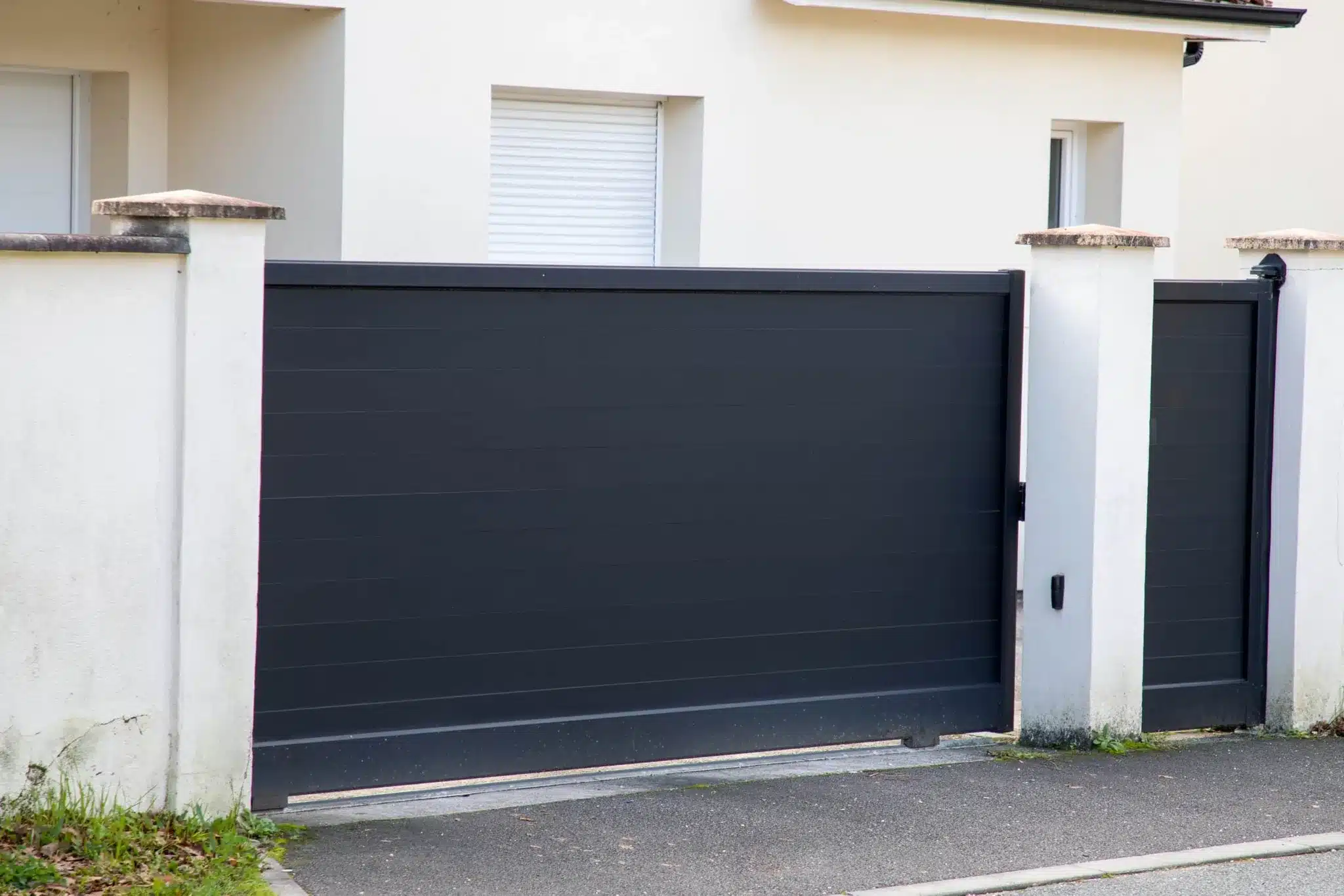
Closed black horizontal-panel driveway gate set into white stucco walls beside a matching pedestrian door.

The full entrance must accommodate the gate throughout its travel.

Walls and columns establish fixed boundaries, but their appearance does not establish their ability to support a moving gate. Mounting space, structural support and clearance are separate questions.

A horizontal-panel sliding gate set within white stucco walls, with matching pedestrian doors, illustrates an entrance with several openings serving different purposes. The vehicle panel's travel must be considered alongside access to those doors. A layout that looks orderly when closed can still create a conflict when a gate moves.

For a swing layout, consider the space between each hinged panel and nearby walls, parked vehicles or planting. For a sliding layout, consider what occupies the area beside the vehicle opening. Preserve a usable walking route rather than treating the pedestrian door as leftover space.

Talk to our team

Compare your entrance's walls, walking route and available gate travel before choosing a movement. Use the contact page on our website to ask Star Gate And Fence about your driveway gate installation.

How is a paired swing-gate entrance configured?

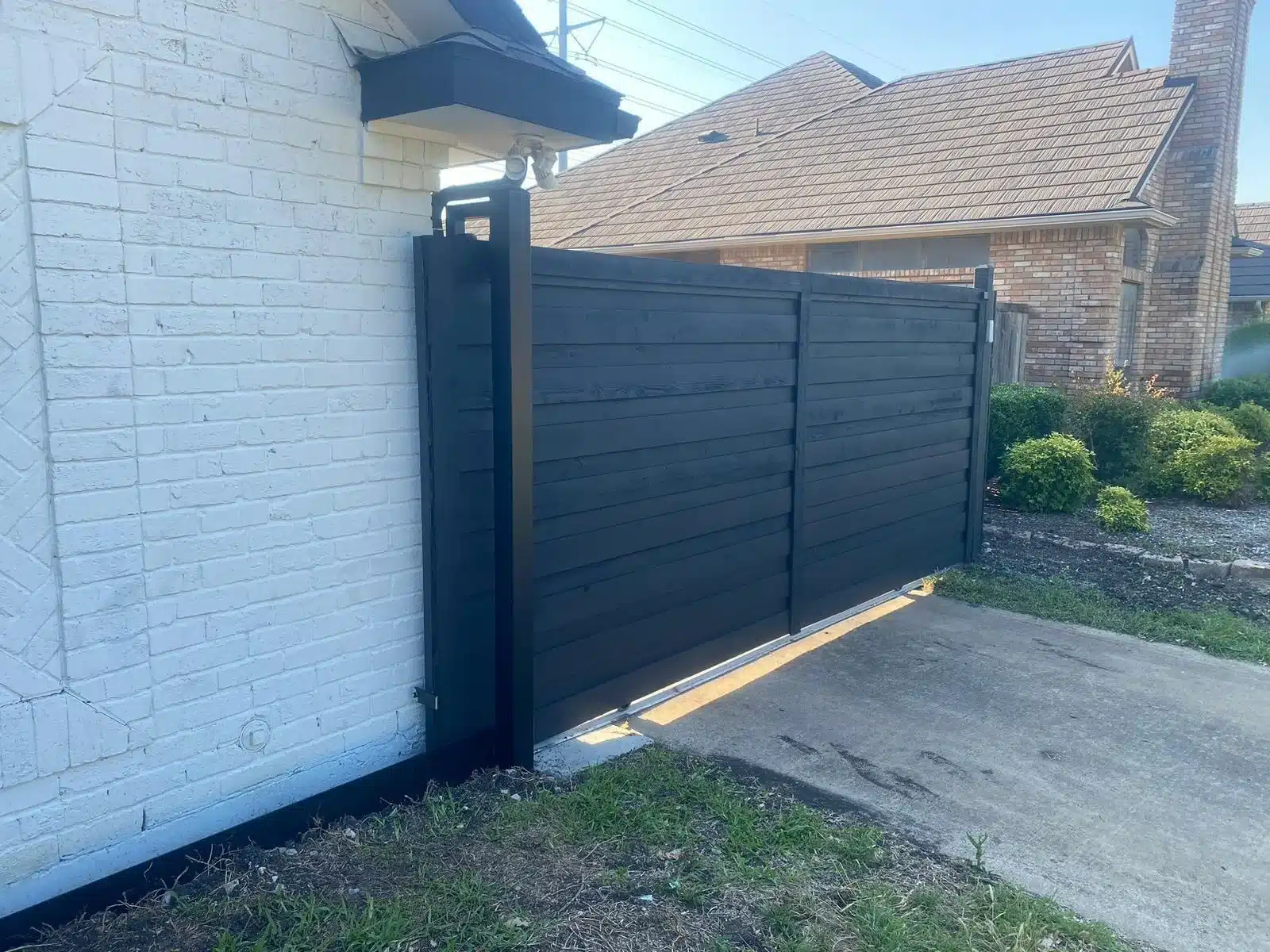
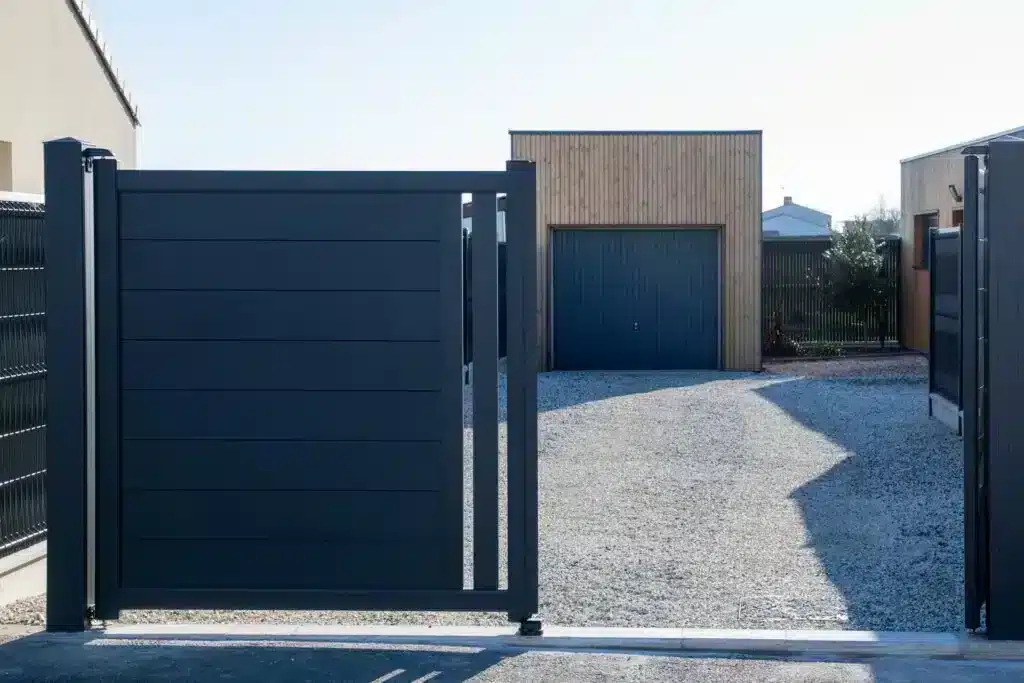
Open black horizontal-slat swing-gate leaves at a gravel driveway entrance.

**Paired swing leaves divide the vehicle opening between hinged panels.**

Each leaf hangs from a support on its side of the entrance, and the leaves meet when closed. This differs from a single sliding panel that travels across the opening and continues alongside it.

Dividing the opening can reduce each leaf's reach compared with a single swing panel spanning the same opening. It also creates another hinged assembly and a meeting point that must remain aligned.

Both leaves need unobstructed travel; splitting the gate does not remove the need to plan their movement.

How do support and automation affect the gate choice?

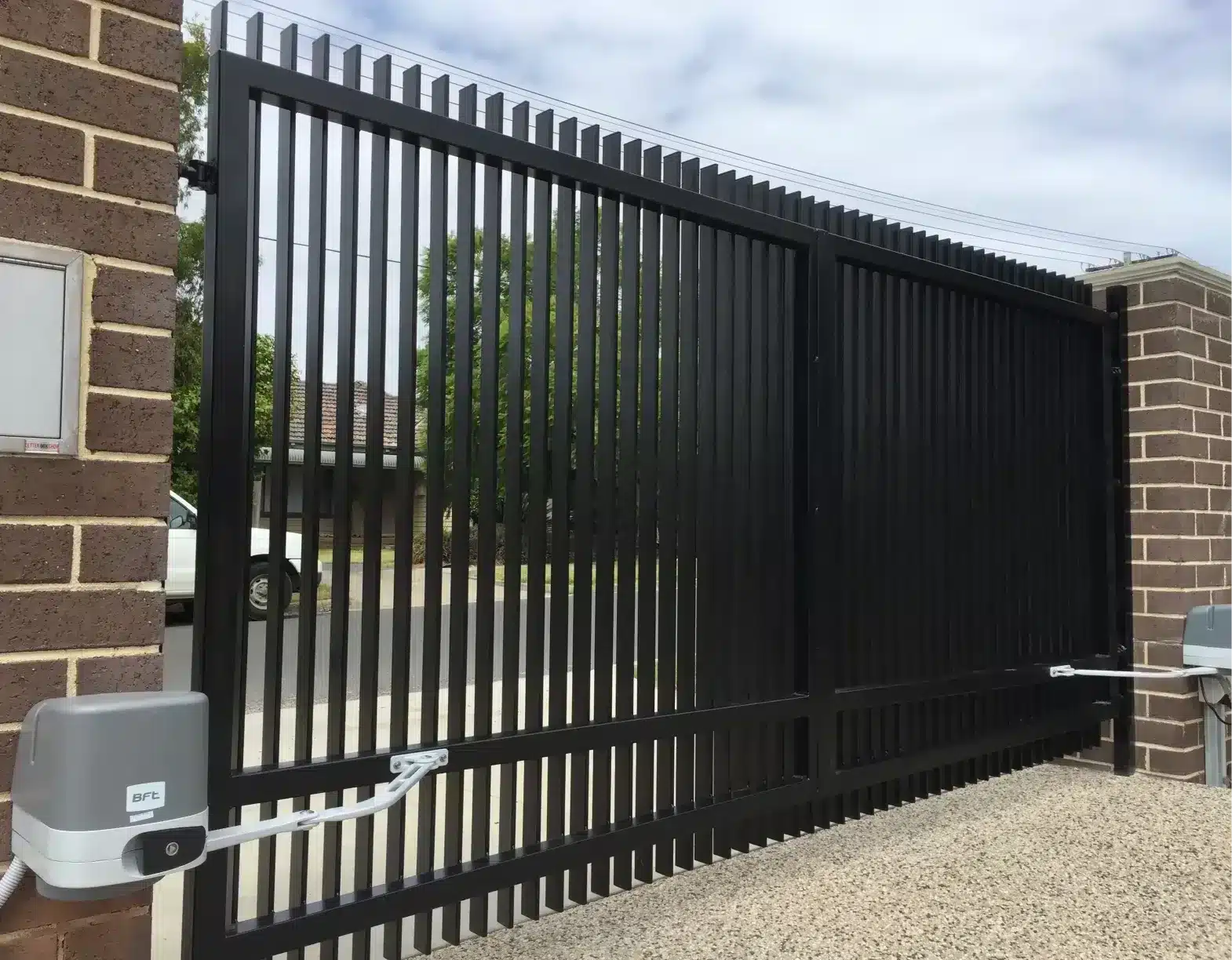
Installed black vertical-slat driveway gate between brick pillars with a mounted automated opener.

The supports, moving hardware and operator must work as one system.

Our McKinney sliding gate installation included a horizontal fence and a sliding gate with a LiftMaster SL 3000 opener. That is a documented installation, not a specification for every entrance.

  • Soil movement: Expansive clay swells as moisture increases and shrinks as it dries. Movement around a support can change gate alignment, so soil conditions matter before selecting the footing design.
  • Footings and supports: Footing depth and diameter depend on the gate loads, soil and support arrangement. A visible post or concrete surface does not reveal the dimensions or condition of the buried foundation.
  • Automation and access: We offer Automatic Gate Installation and Gate Access Control. The operator moves the gate; access controls authorize an opening command. Our gate access control guide explains that separate part of the system.
  • Safety standards: ASTM F2200 addresses automated vehicular gate construction, while UL 325 addresses operator safety. Safe system design also requires attention to trapping and crushing locations around the moving gate. Selecting an operator alone does not establish compliance for the installation.

Can vehicle and pedestrian gates use different movements?

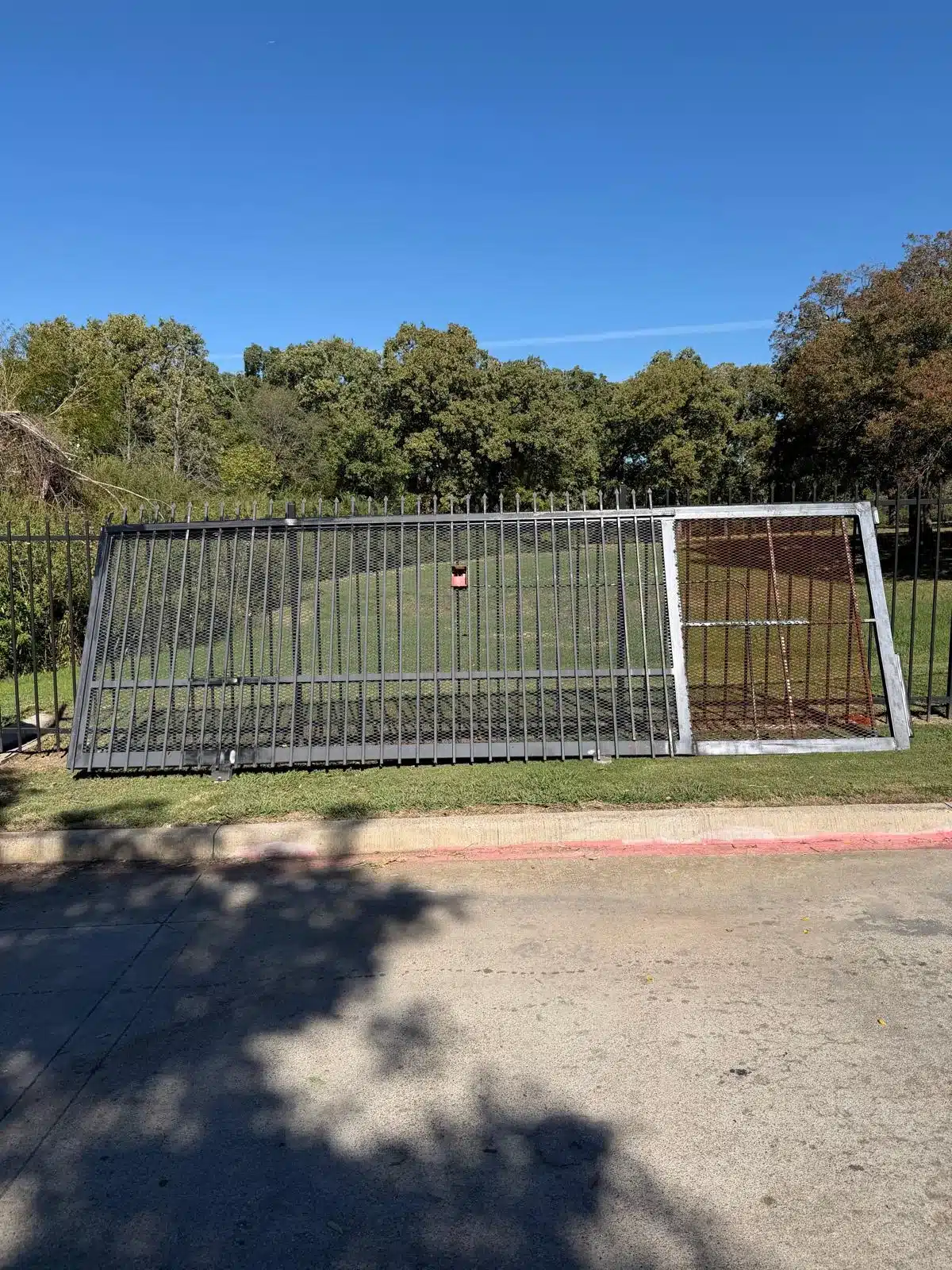
Wide mesh-panel driveway gate with a framed pedestrian section against a backdrop of trees.

Yes, vehicle and pedestrian openings can use different gate movements.

A main sliding section alongside a hinged pedestrian gate is one configuration. The vehicle section travels sideways, while the pedestrian section rotates on hinges. There is no need to make both openings move the same way simply to match their appearance.

Their movements still need to be considered together. The walk gate should not open into the vehicle panel's travel path, and the walking route should avoid the moving vehicle gate. For an automated entrance, pedestrian access deserves its own layout rather than relying on people passing through the vehicle opening.

Frequently asked questions

Can an existing driveway opening determine which gate type is practical?

Yes, but its width alone is not enough. The approach angle and vehicle turning path can also affect where the gate can sit. Consider the largest vehicle that regularly uses the entrance and where it waits while the gate opens, not just whether it fits between the posts.

Can access control be used with both sliding and swing driveway gates?

Yes, both movements can use access control when the device is compatible with the gate operator. A keypad, credential reader or intercom supplies an opening request rather than moving the gate itself. Choosing the movement does not automatically determine which access device or communication connection is appropriate.

How does gate panel weight affect operator selection?

Weight is one selection factor, alongside panel length, movement type and expected use. The manufacturer's operating limits must suit the actual gate. A large solid panel also presents more surface to wind than an open design. A stronger operator is not a remedy for binding hardware or an unstable support.

Can a manual driveway gate be automated later?

Sometimes, but an existing manual gate is not automatically suitable for an operator. Its construction, mounting arrangement and movement need assessment, along with space for safety devices and a suitable power supply. Planning for automation before fabrication can avoid having to alter the gate or its supports later.

Gates, fences and outdoor construction across DFW

Tell us your city and what you need built or repaired, and our direct employees will assess the site and quote the work in writing.